Why Does Lithium Battery Homologation Take More Time?
The Regulation Setting the Standard
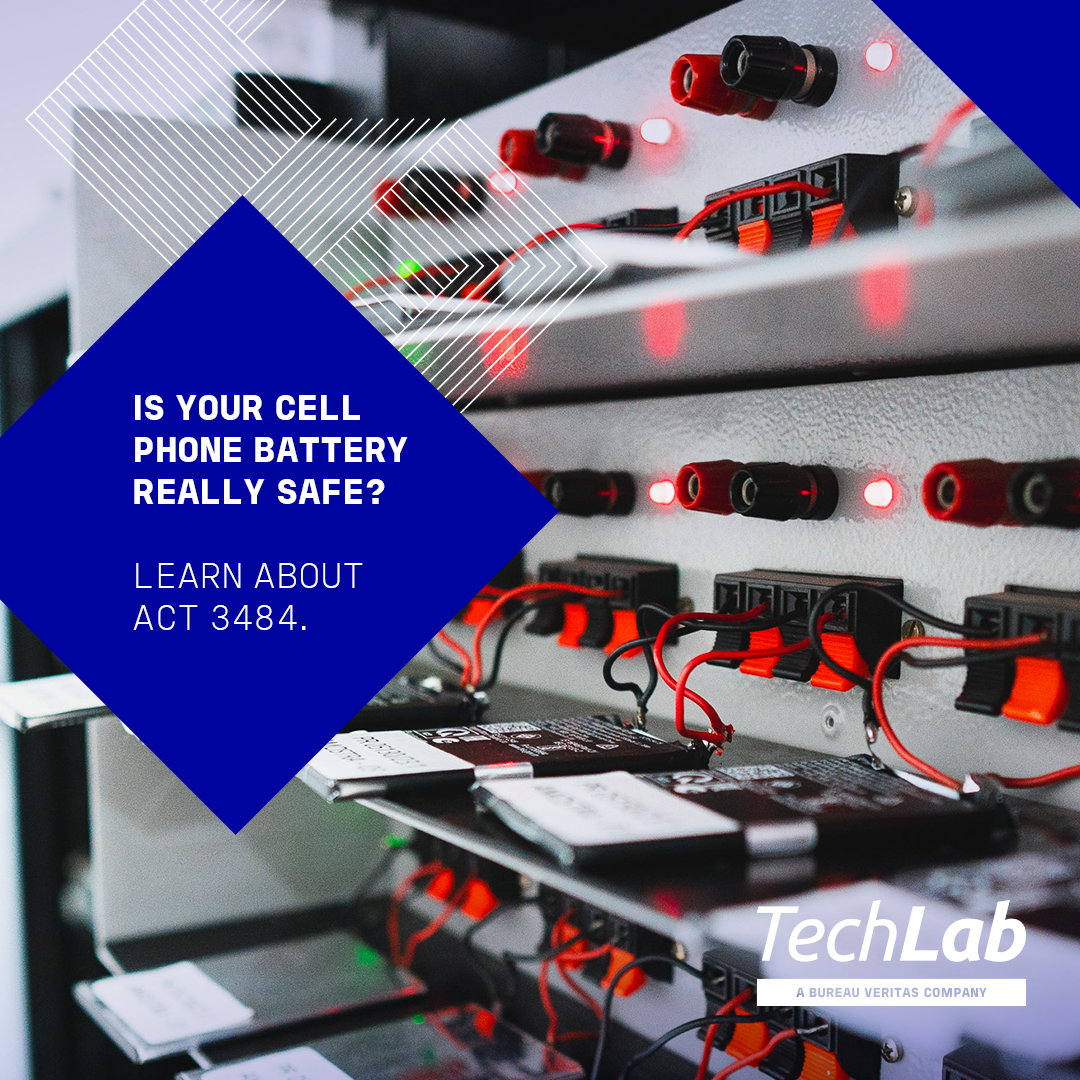
The homologation process for lithium batteries is governed by Anatel's Act 3484. This regulation approves strict technical requirements and testing procedures. It evaluates the compliance of these essential cell phone components. This rule exists precisely to ensure batteries meet the highest safety and performance standards before reaching consumers.
Two Critical Testing Phases
Homologation follows a well-defined protocol divided into two main phases:
- Safety Tests: Evaluate potential risks and battery behavior during critical situations.
- Electrical Tests: Measure component performance and durability over time.
Why Electrical Tests Demand Months
Here is the crucial point: electrical tests cannot be arbitrarily accelerated. The required time does not depend on the laboratory's schedule. Instead, it depends strictly on what the technical standard demands.
The procedure involves 300 complete charge and discharge cycles of the battery. These cycles always respect the specifications provided by the manufacturer. During this period, the equipment constantly monitors battery aging. It measures how its capacity naturally degrades over time.
We rely on state-of-the-art equipment to execute multiple processes simultaneously. This ensures guaranteed quality and precision.
Electrostatic Charge: The Invisible Risk
The accumulation of static electricity is an invisible and highly dangerous ignition source in explosive atmospheres. When the accumulated voltage generates a spark that exceeds the environment's minimum ignition energy, a catastrophic explosion can occur. This risk is prevalent in chemical, pharmaceutical, or oil industries.
How the Risk Occurs
- Generation: Friction, rapid flow of flammable liquids in pipes, or dispersion of combustible dusts generate thousands of Volts.
- Accumulation: Occurs when insulating materials are not grounded, preventing natural charge dissipation.
Regulation
Item 26.13 of the IEC 60079-0 standard (corresponding to the ABNT NBR IEC 60079-0 series in Brazil) establishes strict criteria. It details the procedures for surface resistance testing of enclosure parts made with insulating (non-metallic) materials.
Testing Objective
The test aims to ensure that non-conductive materials used in explosive atmospheres do not accumulate dangerous electrostatic charges. This prevention stops spark generation that could cause ignition in hazardous (Ex) areas.
We have trained professionals and complete infrastructure to execute the necessary tests, ensuring full compliance with current standards.
Protect your operation. Contact us and request an evaluation!
The importance of security in telecommunications equipment.
The Risks
In an increasingly connected world, internet browsing risks grow proportionally. Currently, the main malicious attack risks include malicious emails and phishing, server attacks, data hijacking (ransomware), and virus-laden harmful programs.
The Regulation
Anatel and international bodies recognize that data security is critical. Therefore, they have established strict standards to protect network infrastructure.
Anatel's Acts 2436, 9281, and 77 define mandatory security parameters for telecommunications equipment. These rules ensure that your data is protected.
We are evaluated and accredited to meet this full scope. We perform security tests in strict compliance with current regulations.
Your security is our priority. Contact us and evaluate your equipment with our team!
Safety requirements for household appliances: the importance of the ICE 60335-1 standard.
The International Standard
The IEC 60335-1 standard establishes essential guidelines for household electrical appliances. It protects users against major hazards:
- Electric shocks
- Fires
- Injuries and damage
Rigorous Evaluations
Every detail is verified during evaluation:
- Proper insulation and grounding
- Equipment stability
- Enclosure design to prevent dangerous contact
- Surface temperatures to prevent burns
- Product mechanical and electrical resistance
Your Protection First
These requirements ensure you and your family use household appliances with total safety. This compliance is not a mere formality—it represents real protection.
When choosing your appliances, verify that they meet the IEC 60335-1 standard. Safety is non-negotiable.
Safety in Explosive Atmospheres: The ABNT NBR IEC 60079 Standard
The International Standard for Hazardous Areas
The IEC 60079-0 standard (adopted in Brazil as ABNT NBR IEC 60079-0) is the master document. It specifies the general requirements for the construction, testing, and marking of electrical equipment and components intended for use in explosive atmospheres.
Fundamental Pillars of the Standard
- General Requirements: Establishes basic rules applied to all "Ex" equipment (explosion-proof, increased safety, intrinsically safe, etc.), minimizing ignition risks.
- Rigorous Marking: Defines the coding system engraved on the equipment. This marking indicates the protection type (e.g., Ex d, Ex e, Ex i), gas or dust group, and temperature class.
Importance and Compliance
In areas with gases, vapors, or combustible dusts, electricity becomes a potential accident trigger. Compliance with IEC 60079-0 ensures industrial plants align with safety demands like the NR-10 regulatory standard. In Brazil, equipment certification is regulated by Inmetro ordinances.